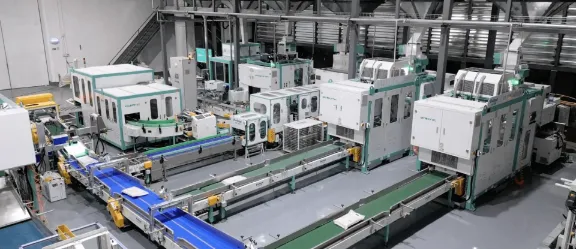

An automatic packing line takes free-flowing bulk material such as rice, beans, corn or sugar and turns it into weighed, closed bags stacked on a pallet, with minimal manual handling. Operators still replenish the empty-bag supply and supervise the line, but the repetitive work is done by machines. For a factory owner or plant manager, the real question is not just which machine to buy, but how every station works together. This guide walks through each stage of an automatic bagging line, the points where integration decides performance, and how a turnkey packaging line designed as one system helps you manage them.
What is an automatic packing line? The 7 stages
An automatic packing line is a series of connected machines, coordinated as one system, that moves product from the end of production to a pallet ready for dispatch. Most lines follow the same seven stages:
| Step | Stage | What happens |
|---|---|---|
| 1 | Feeding | Material is fed from a silo or hopper at a controlled rate |
| 2 | Weighing | A scale doses the target weight within the machine’s tolerance |
| 3 | Bag placing and filling | A bag is picked, opened, placed on the spout and filled |
| 4 | Sealing / sewing | The bag is closed by sewing or heat sealing, depending on bag type and machine model |
| 5 | Check-weighing (where specified) | Bags are verified and any bag outside tolerance is rejected; included when the project scope calls for it |
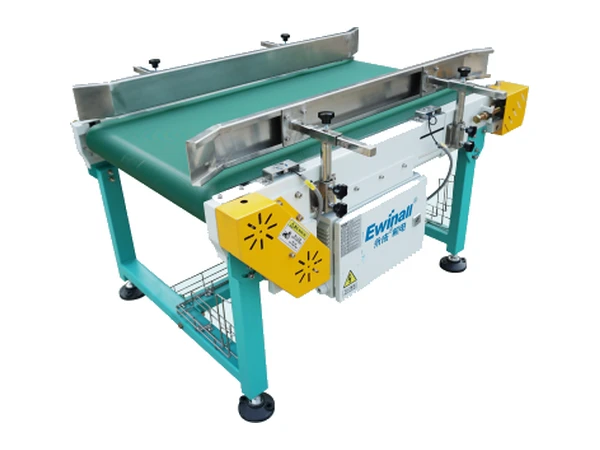
| 6 | Conveying | Conveyors carry finished bags to the end of the line |
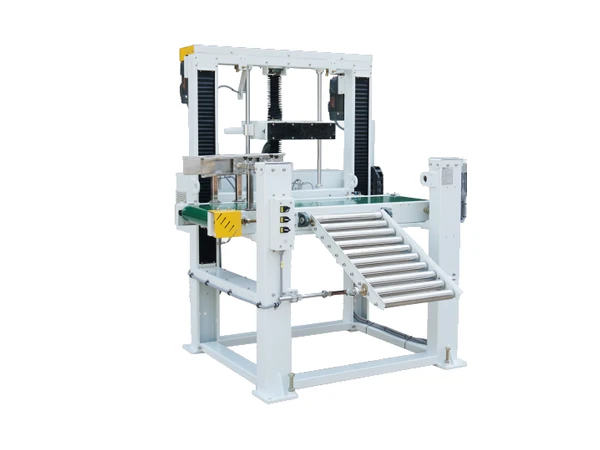
| 7 | Palletizing (where included) | Bags are stacked in a set pattern on a pallet |
The exact configuration, including whether the line has a check-weigher, a reject station or a palletizer, depends on your material, bag type, output target and project scope. That is why a site survey comes before any equipment is chosen.
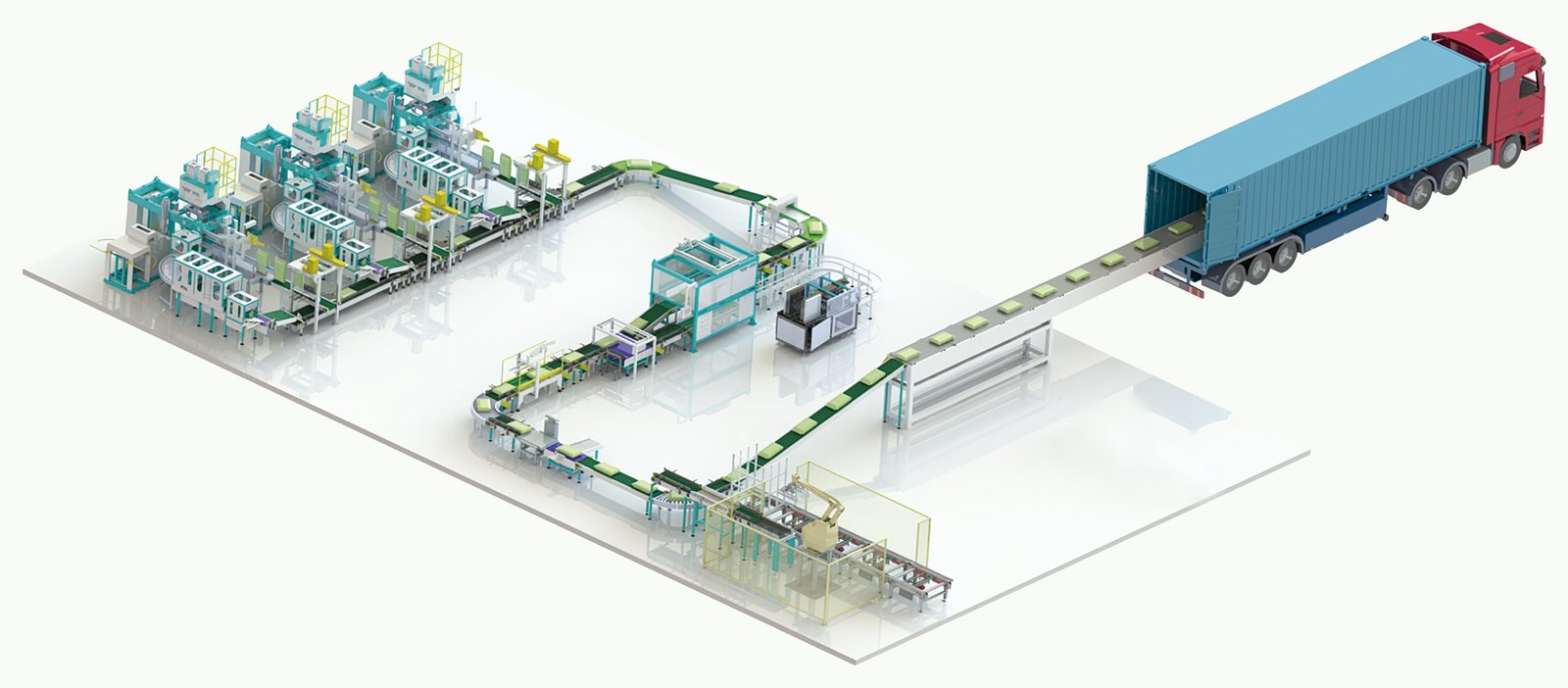
The packing machine sets the speed and accuracy of the whole automatic bagging line
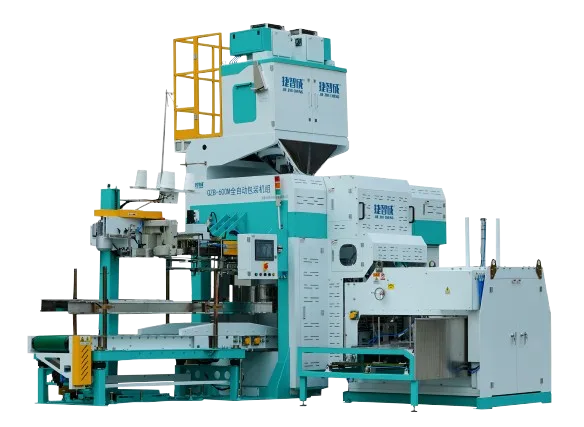
Every station after the packing machine has to keep pace with it, and every station before it has to keep it supplied. That makes the packing machine the heart of an automatic bagging line: its weighing accuracy decides how much product you give away, and its cycle time decides how fast the whole line can run.
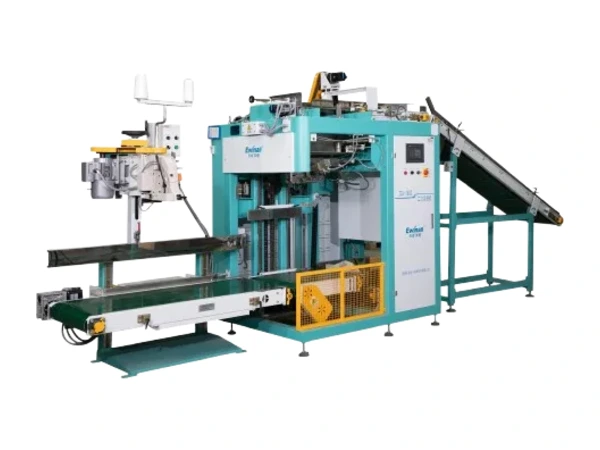
For example, Ecronic’s QZB-600M2 automatic packaging machine automates bag feeding, weighing, filling, sealing and conveying in one workflow. It is rated at 500–600 bags per hour for 25–50 kg open woven bags; actual output depends on the material and the bag specification. A three-load-cell weighing structure helps keep weighing stable, servo-driven mechanisms handle the bag, and safety interlocks stop the machine during faults. Because the other stations are sized around the packing machine, Ecronic designs a line from the packing machine outward. If you are still comparing options, see our range of automatic packing machines.
Where integration decides how well a line performs
Many factories build a line from equipment supplied by several companies, and it can work well when the interfaces are planned carefully. It simply asks more of the integration. Three points deserve particular attention in any line:
- Speed matching. Each station must be sized to the packing machine’s output. If a downstream station runs slower, it sets the pace of the whole line.
- Control signals between stations. Messages such as “bag ready”, “pallet full” and “fault” need to be defined, wired and tested together. Small timing differences can cause jams or stoppages.
- Clear responsibility. When a line stops, diagnosis is faster when one team can see the whole system rather than one machine.
These are integration questions, not equipment defects, and they are where planning the line as one system pays off.
Turnkey packaging line: one designer, one control approach, one point of responsibility
A turnkey packaging line brings design, manufacturing, installation and commissioning under one supplier, so those integration points are planned together from the start. Ecronic’s Customized Packaging System is built this way:
- Site survey and custom layout. Engineers assess your floor plan, material flow and access points, then specify equipment for your actual space.
- Unified control. Lines are built around a centralized PLC control platform with a touch-screen HMI across the stations. The specific controller and components are confirmed for each project configuration.
- Coordinated safety interlocks. The system is designed so that a fault at one point can stop the sequence safely, rather than only a single machine.
- Room to grow. The layout is planned with room to add stations or upgrade machines later; how much is possible depends on the available space and the original scope.
- A single point of contact for design, fabrication, installation, commissioning and operator handover.
For rice mills, the One-stop Rice Packaging System applies the same approach, combining flow-control weighing, automatic bagging and, where dispatch requires it, secondary bagging under one PLC-controlled line.
End of line packaging in practice: Ecronic reference projects
End of line packaging is where small inefficiencies add up fastest, because everything upstream depends on it. Ecronic, founded in 2000 and headquartered in Pathum Thani, Thailand, reports customers in more than 60 countries. Two projects on its case studies page show the range:
- Yihai Kerry (2015): an automated rice packaging line using multiple DCS-series weighing and bagging stations running in parallel, with conveying matched to the line’s throughput. Ecronic reports it running at 1,000 tons a day.
- COFCO Group (2012): Ecronic’s first fully automated packaging line, delivered as one continuous system covering bag feeding, weighing, filling, sealing and conveying.
Planning a packing line in Thailand or abroad? The same site-survey process applies to every project.
Is an automatic packing line right for your factory?
If you are weighing up a new line or an upgrade, start with your material, your target bags per hour and the floor space you have. A site survey turns those three answers into a concrete layout, and delivery time is confirmed once the scope is clear. After delivery, Ecronic provides operator training and after-sales technical support under its service terms.
Ready to see what a line could look like in your factory?
Request a line layout proposal
Or call +66 96-640-4308 or email service@ecronic.com